In most private schools the arrears problem does not begin with the parent, but with the school itself: a discount agreed verbally and never recorded, a receipt in a notebook that was never entered in the statement, and a reminder that was not sent because nobody knew who was late in the first place. When the second installment falls due, the accountant finds that the numbers do not match. These are practical steps that reduce arrears before they pile up.
Step one: a clear fee structure before the year starts
Good collection starts in the summer, not in September. Define the fee types clearly: tuition, books, transport, activities, and uniforms if any. Each type has an amount for each stage or grade, and each academic year has its own structure, so this year's prices do not mix with last year's.
Then set the installment dates: how many installments? When is each due? What is the amount each time? Write this in a policy given to the parent at registration, preferably signed. A parent who knows the installment date from the start is less likely to be late than one who is surprised by a demand.
Step two: record discounts in writing and from the start
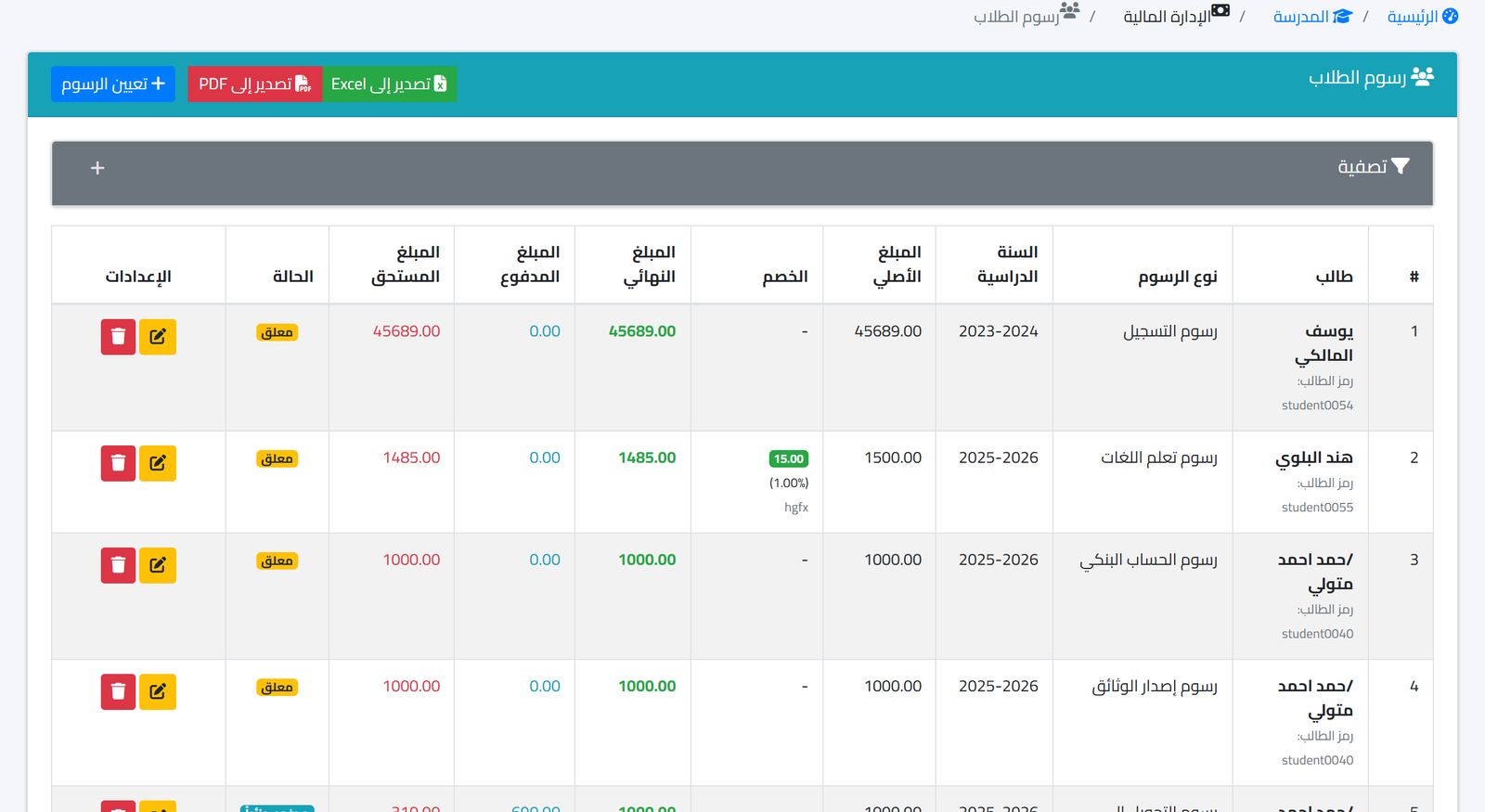
Discounts are the biggest source of disputes in collection. A sibling discount, a staff-child discount, and a discount the principal agreed to in a phone call. If the discount is not recorded on the student's own account, the student will appear overdue in the statement while the parent believes he has paid everything he owes.
The simple rule: no discount without recording it on the student's account, with the original amount, the discount and the final amount. This way the balance for each student is one number that the accountant, the principal and the parent all agree on.
Step three: a receipt for every payment, and a recorded payment method
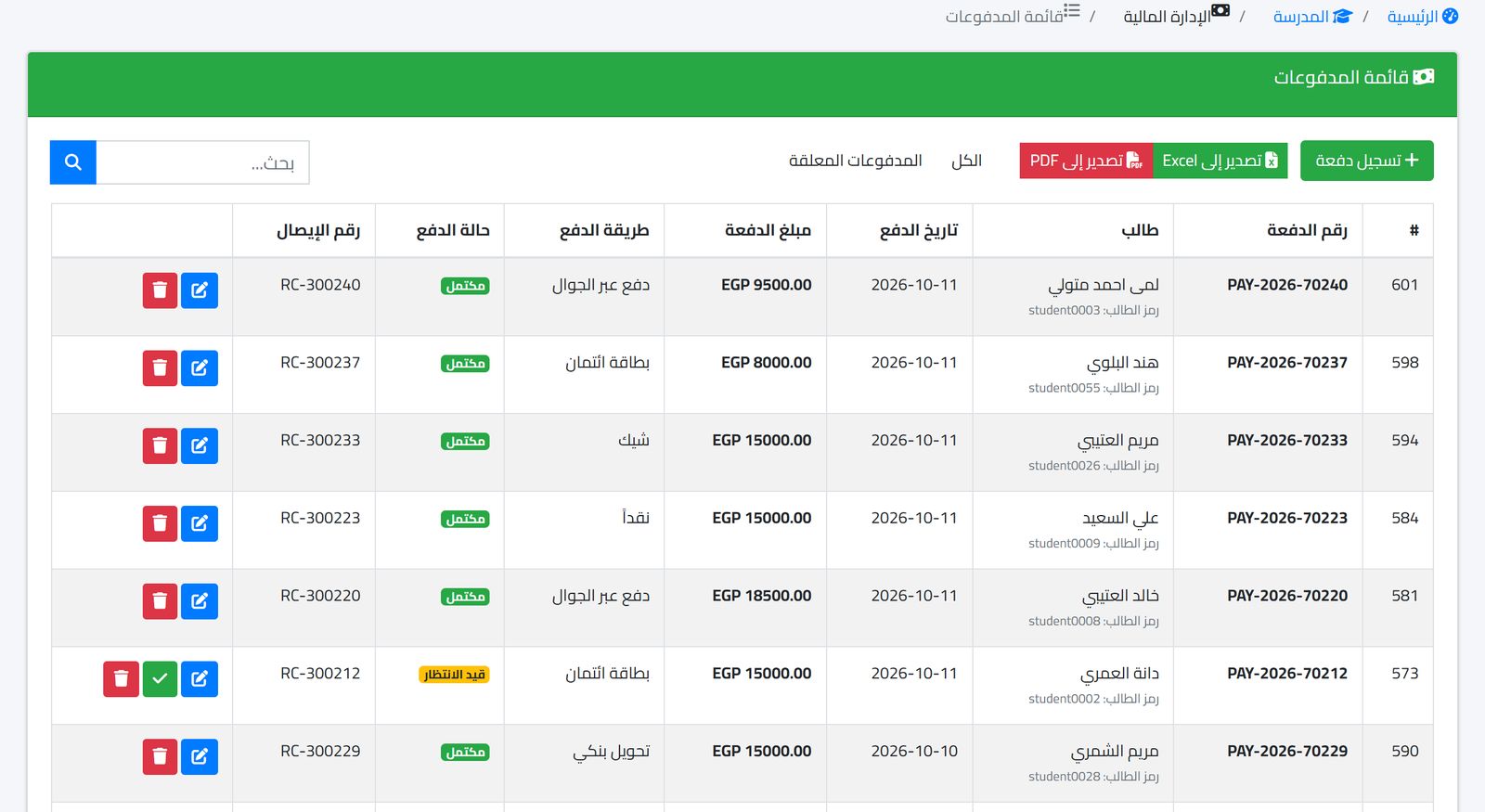
Every amount that enters the school must have a numbered receipt, recorded on the student's account the same day. It is not enough for the receipt to be in the cash book; it must show in the student's balance immediately, otherwise a reminder will go to a parent who paid yesterday, which damages their trust in the school.
Also record the payment method: cash, bank transfer, or card. When you reconcile the cash box at the end of the day or the bank statement at the end of the month, you will know which amount came in from where. Bank transfers in particular need attention, because a parent may transfer without telling the school, so the money sits in the bank while the student appears "overdue" in the statement.
Step four: remind before the due date, not after
Most schools send the demand after the installment is late. It is better to send a reminder a few days before the due date, in a calm tone that mentions the student's name, the amount and the date. Many parents are late because they forgot, not because they do not want to pay.
After the due date, arrange the follow-up in stages:
- A second reminder a few days after the due date, in the same calm tone.
- A phone call from the accountant or student affairs after a week.
- A meeting with the parent if the delay continues, to agree on a written schedule.
Avoid letting the student himself find out about it inside the classroom. Communication is with the parent alone, and away from public WhatsApp groups. If your school relies on WhatsApp, you may find school WhatsApp: sending absence and results automatically useful.
To make the message useful, make it carry the full information: the student's name, the fee type, the remaining amount, the last date, and the available payment methods. A parent who finds all of this in one message will not need to call the school to ask about the amount, and will usually pay in the next few days.
Step five: weekly follow-up with specific numbers
Do not wait for the end of the term to learn the size of the arrears. Set aside a quarter of an hour each week to review three numbers with the principal: total due to date, total collected, and the remaining balance. Then look at the list of students who have remaining balances after the due date, and sort it by amount.
An illustrative example: a school with 400 students, and the second installment is 10,000 pounds or riyals per student. If only 15% of students are late, that is 60 students and 600,000 pounds or riyals of deferred revenue. A number of this size affects next month's salaries, which is why it deserves a weekly review, not a termly one.
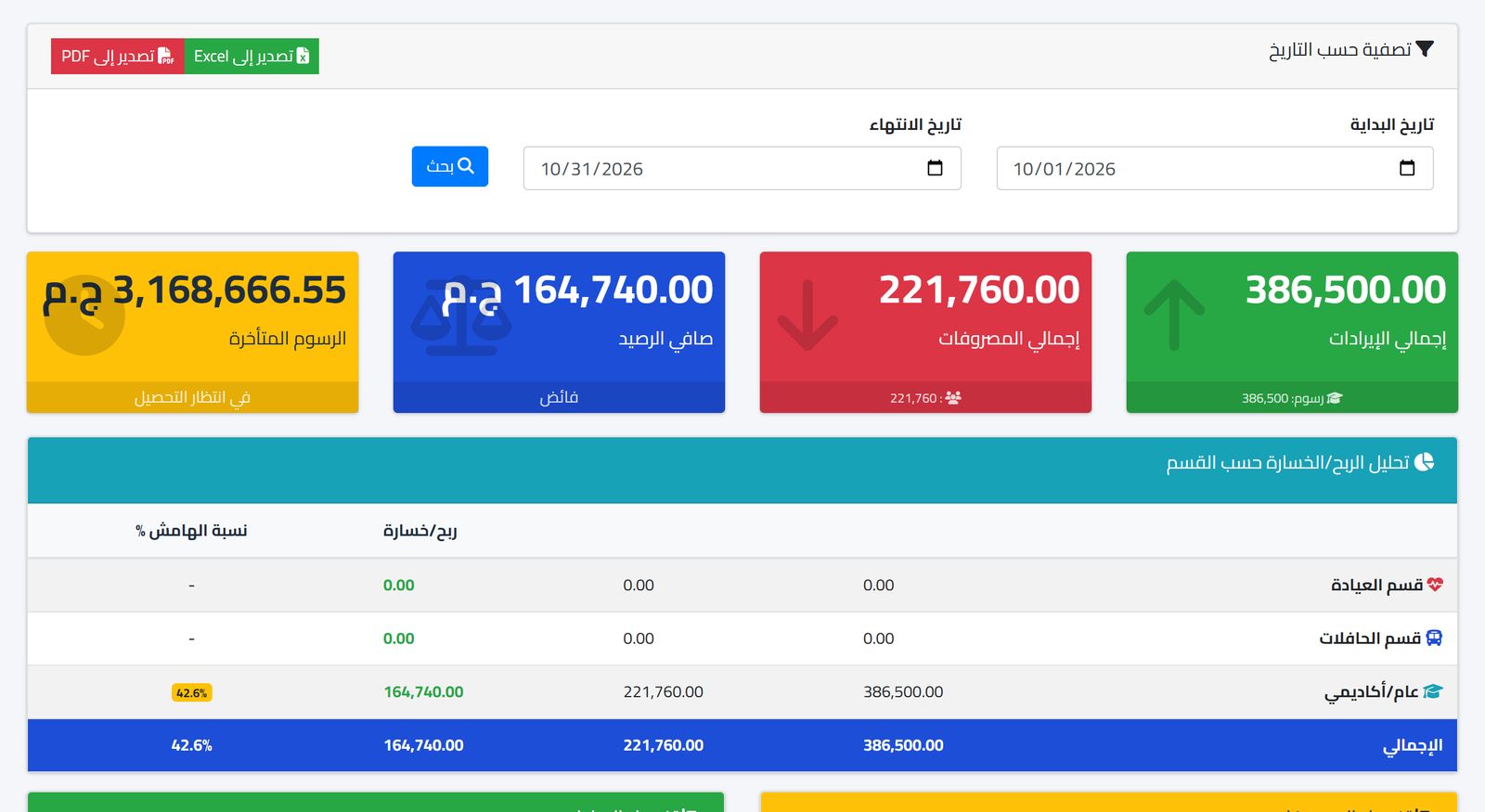
Also watch revenue and expenses together. Good collection is not enough if expenses go out without follow-up, and a report that shows both by department makes clear where the school's money goes.
Step six: make payment easy for the parent
Part of the delay is because paying itself is tiring. A parent who has to come to the school cashier during working hours will postpone paying until a convenient day. Offer more than one method: cash at the cashier, a bank transfer to the school account, and card if available.
With bank transfer in particular, ask the parent to write the student's name in the transfer details and send a photo of the receipt, and assign one employee to review the bank statement daily or every two days and record the transfers on student accounts. This way no amount stays in the bank while the student appears overdue.
Who decides exceptions?
Every school has special cases: a father who lost his job, or a family with three children in the school asking for more time. The problem is not the exception itself, but that more than one person decides it in different ways. The accountant gives an extension, the vice principal promises a discount, and the principal knows of neither.
Put exceptions in the hands of one person, usually the principal or whoever they delegate to, and require that each exception be written with its amount and duration. Review the exceptions list at the end of each term: how many students got an extension? And how many of them kept to it? This review helps you set a clearer policy for next year instead of deciding case by case.
Mistakes that increase arrears
- Verbal discounts that do not appear in the student's account.
- Recording payments in the statement days after they were received.
- Sending a reminder to a parent who has already paid.
- No written date for each installment.
- Reviewing arrears once, at the end of the term.
Before you start with any tool, agree with the principal on three things in writing: who records payments, who sends reminders, and who decides exceptions. When roles are clear, the tool becomes a place where everyone's work comes together, not a new reason for arguing over who forgot what.
How this works in Prima Schools
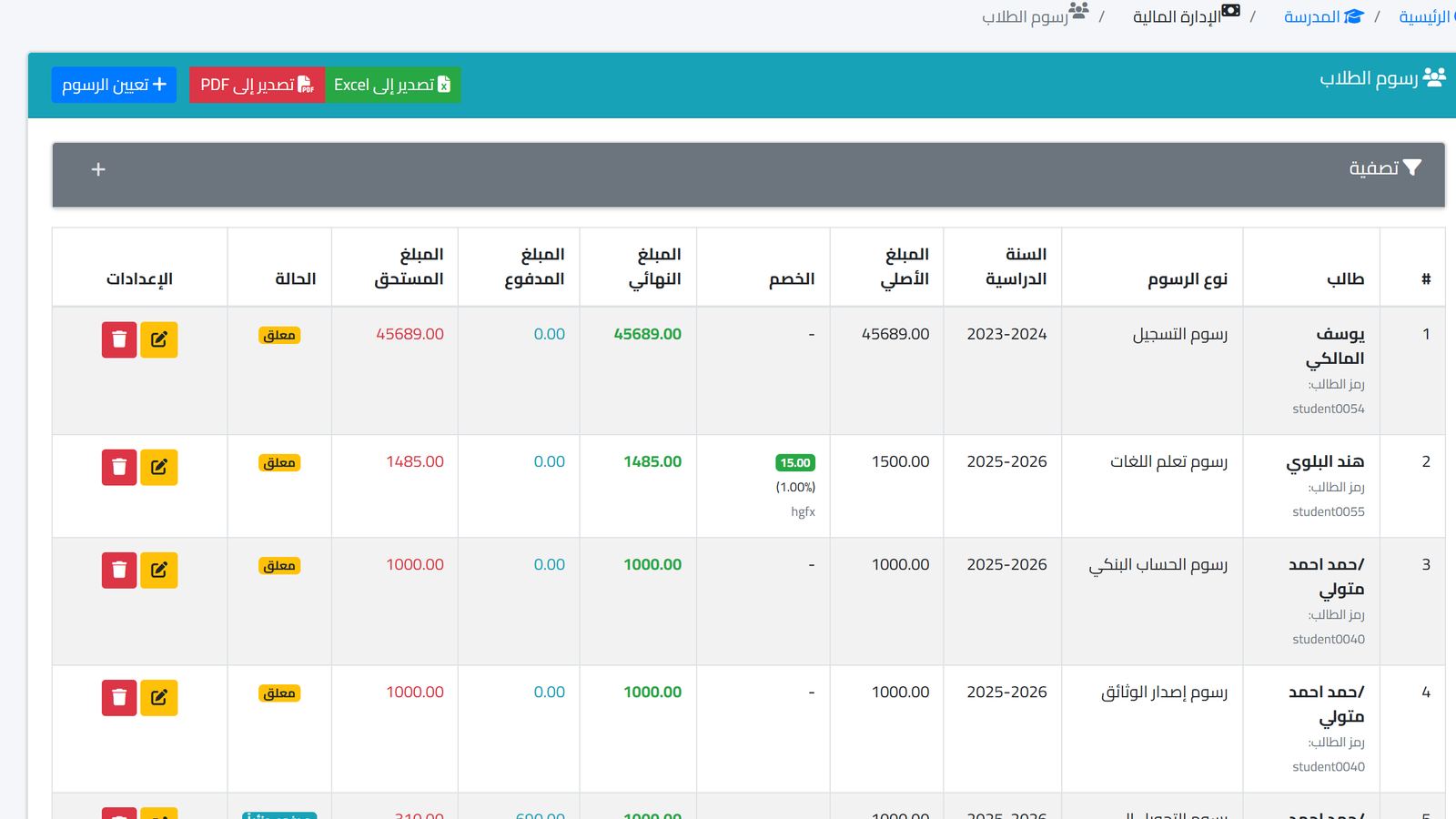
In Prima Schools you define fee types and structures for each academic year, in whatever currency the school deals in. On each student's account the fees appear with the original amount, the discount, the final amount, the paid amount, the remaining amount and the status, as in the first image, so no discount stays outside the system.
Each payment is recorded with its date, amount, payment method and receipt number, and the payments list can be exported to reconcile with the cashier or the bank. The financial reports show fees due, revenue, expenses and net result, with analysis by department and a date filter, which are the numbers you need in the weekly review.
Reminders are sent from the notification center by SMS, WhatsApp or email, to a specific group of parents with variables such as the student's name. For the school accountant there is a detailed guide in closing the financial month step by step, and you will find the rest of the details on the features page.
Frequently asked questions
How many installments suit a school?
It depends on the segment of parents you serve. More important than the number is that the dates are written and known from registration day, and that each installment is tied to a specific due date.
Should I send the reminder to all parents?
No, send it only to those with remaining balances, after making sure all recent payments are recorded, so a reminder does not reach someone who has paid.
What should I do with a parent who is genuinely struggling?
Sit down with them and agree on a written schedule with specific amounts and dates, and have the accountant review the recorded payments against these dates every week.
If you want to see how your students' fees and arrears appear on one screen, start the free trial and enter this year's fee structure.